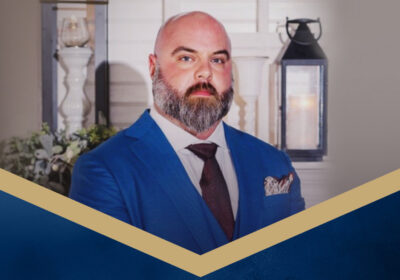
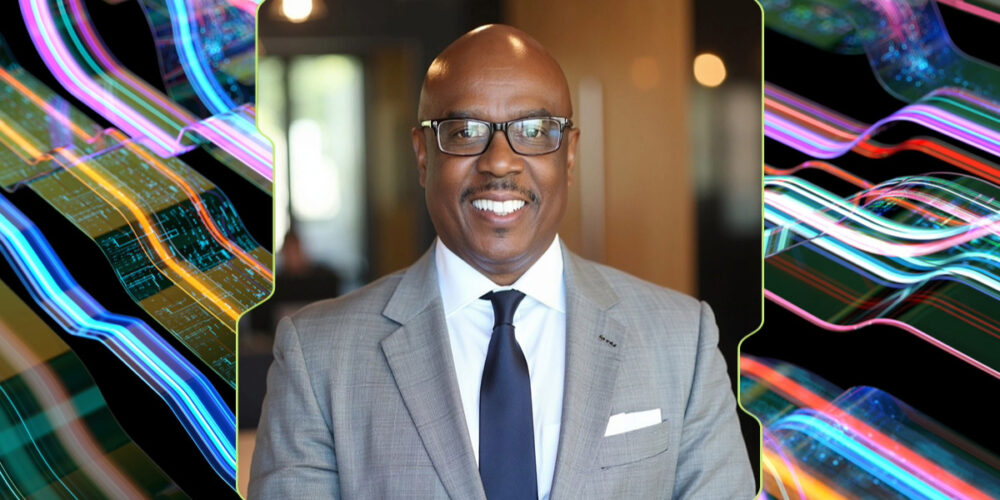
In a world of ever-evolving technology, adapting to change is key to success. Artificial intelligence has become essential in many careers, though it is often met with skepticism. For Columbia Southern University alumnus Anthony Crowder, artificial intelligence (AI) is not something to fear; it is something to embrace and use to your advantage.
A safety consultant with 17 years of experience, Anthony is the founder and CEO of Diamond Safety and Training, an organization focused on developing AI-powered workplace safety software, ergonomic wearable backpack technology, risk management consulting and project management software.
The mission is clear: to create a safe working environment with the highest level of OSHA-compliance safety training available in the field.
His career in safety began 15 years ago when he was the director of the training program with Youth Field, an organization based in Memphis, Tennessee, serving high-risk youth.
“I was dealing with high-risk youth, and the board members thought it would be a great idea if I went through the training to get my OSHA certification,” he said. “I always tell people safety became an addiction, and I’ve been in it and loved it ever since.”
Anthony’s career in AI began roughly four years ago while he was studying for a bachelor’s degree in occupational safety and health at CSU. He managed late night study sessions while balancing family life and a full-time job. Despite his busy and sometimes overwhelming schedule, he discovered a passion for using AI in the safety field.
Developing AI Safety Software
Anthony is a member of the American Society of Safety Professionals (ASSP), where he first began surveying safety professionals about challenges in the industry. During this time, he was fully invested in AI consultant training.
“I was doing CSU, and I was going through the AI consultant training at the same time,” he said. “I would do the consulting training on Friday evenings, and then Saturday and Sunday basically all day. They were teaching me the prompting; they were teaching me how to get AI not to hallucinate; they were teaching me how to make AI sound like me and not robotic.”
The more he learned about AI, the more interested he became. The training taught him how to conduct compelling research with the goal of answering safety professionals’ questions regarding the challenges they faced.
“I’d go deep down this rabbit hole, and I just got bitten by it to see how interesting it was and how it could really help me do research,” he said. “Not so much doing the project, but getting me the information to do the research, to help these people to answer their questions.”
After compiling the information, his mentor challenged him to create AI software. With this idea, he consulted his business partners and started talking about AI extensively, and it grew from there.
“Four years ago, believe it or not, AI was good, but AI was not as great,” he said. “It was literally what they call ‘hallucinate.’ The research information wasn’t true, so I had to go back to my mentors and tell them what I was dealing with.”
Ultimately, AI is only as smart as what you feed it, and the data from the research Anthony had while developing the software was derived from outdated OSHA information. Luckily, he ran across individuals who were willing to teach him how to train the models to receive true and realistic information.
“You can research, but if you don’t have research information that’s equivalent to what’s going on today, it will take you down the road of going back and researching stuff directly off of OSHA…it’s good information but it’s old information, and it wasn’t relevant to the incidents that were in the risk management database that the brokers and the insurance industry were dealing with today.”
Anthony learned how to train models, validate outputs and build workflows that cross-referenced real-time insurance and workers’ compensation data. The result was a system that links workplace incident data with work comp claims, allowing companies to lower insurance rates by reducing injury risk.
The Ergonomic AI Wearable Backpack: What It Is and How It Works
Anthony partnered with Scott Coleman, a sports physiotherapist based in Australia, to dive deep into learning about ergonomic wearable backpack designed to monitor and correct lifting behavior in warehouse and manufacturing environments.
Coleman had been studying the cause of back injuries. His mother, a former nurse, was the inspiration.
“She was a hands-on nurse who was one of these little, small-framed women who dealt with paraplegic individuals, and she would have to turn them over,” Anthony said. “Back then they used a heavy-gauge machine, almost looked like an engine hauler…they would strap these individuals and crank them off the bed…they would still have to wrestle with the dead weight of these individuals.”
Anthony spent three months in Australia working with Coleman and learning wearable technology before bringing it into the industrial safety space. This wearable technology is designed to fit the individual wearing it — not just by size but also by gender, prior injury history, age and overall health. Using this data, the system records video of the worker’s lifting technique, uploads it and generates a personalized ergonomic training program. It is not a cookie-cutter one-size-fits-all solution.
If a worker reverts to bad lifting habits during their shift, the backpack sends a haptic buzz notification to the worker and simultaneously sends an SMS text alert to their supervisor. At the end of each shift, a full report is generated for the safety team showing collected risk data, individual performance metrics and whether current training thresholds are being met.
“If you are bending over the wrong way, it’s going to measure your ergonomics,” he explained. “We have a training program to train you that you are not bending properly. When we input the recording of how you’re lifting, it’s then going to generate a program for us to now teach you the proper way you need to bend or to lift.”
The system allows thresholds to be adjusted per individual. For example, one worker’s safe-lift threshold may be set at 45% capacity while another worker’s metrics are set at 25% based on their physical profile and health history.
Using AI as a Tool – Not a Replacement
While AI is advancing at an astonishing rate, the human role in developing AI software is critical, especially in the safety realm. It is not a job replacer. Without humans inputting structured prompts, defining parameters and validating outputs, the technology will fail.
“Use AI to solve problems,” he said. “AI is not a do-all, fix-all tool. AI equips safety professionals to complete their research faster, but they still must validate the information, ensure OSHA compliance and do the actual work.”
Staying current with new trends is a vital component in ensuring the backpacks work properly to keep workers safe, as attending safety conferences and being part of safety associations is a must in the industry.
“You have to find a software that fits what you’re doing, and you must be selective. If you jump with everything that’s coming up new, you’ll be going down every rabbit hole.”
Rather than chasing every new AI tool, Anthony’s philosophy is to select two to three AI partners the company grows alongside, sharing improvements and feedback in a collaborative network.
“As they improve, we improve and vice versa,” he said. “We share that information. It’s solving a problem; that’s the bottom line. We use AI to eliminate, not just to lower the risk.”
Putting His Education into Practice
Anthony received a bachelor’s degree in occupational safety and health from CSU with plans to pursue a master’s degree in the same field. In addition, he earned a risk management certification and was invited to speak at Illinois State University in 2023 as a consultant. The college is a hub for insurance and risk management.
“By enrolling at Columbia Southern University, I learned to think bigger about what was possible for my career and my impact,” he said. “My coursework gave me a strong foundation in safety and leadership, but it also pushed me to look beyond my immediate surroundings and step outside my comfort zone. As I got more involved in the safety profession, the confidence and credibility I gained through CSU helped me build connections through the American Society of Safety Professionals and to be bold enough to ask for new opportunities.”
“Those connections opened doors for me to collaborate with research teams at Illinois State University, where I worked alongside professionals exploring the future of safety through wearable technology, artificial intelligence and other emerging tools. Through that work, I was also introduced to risk management and began to understand how the insurance industry and risk management go hand in hand, how insurers look at exposure, and how companies structure their safety programs to control risk and protect people and assets.”
AI’s Impact on Safety in the Future
Anthony’s goal is to reduce injury risk in the safety field by using AI to analyze current, relevant data.
“Believe it or not, one of the things that has killed safety in the years is not having data that you can quantify, that you can utilize verses still using data that’s five years old for training, for improving and even for risk management,” he said. “You cannot use this old data.”
He is also passionate about quality of life after retirement and the long-term cost of workplace injuries including chronic pain, medication dependency and more. By using AI to enhance safety in the workplace, these chronic conditions may be reduced.
“Columbia Southern University opened the door for me to connect with professional organizations where I was first introduced to AI in safety, AI-driven risk management and wearable technology,” he said. “By taking advantage of those opportunities while pursuing my degree, I was able to gain new knowledge, think beyond traditional approaches to safety and envision how these emerging tools can shape the future of our profession.”
“My dream is to one day return to CSU as a professor, teaching future Knights about AI in safety, AI risk management, and wearable technology, so I can pour my real-world experience back into the classroom and help the next generation go even further than I have.”
Disclaimer: These testimonials may not reflect the experience of all CSU students.
Multiple factors, including prior experience, geography, and degree field, affect career outcomes.
CSU does not guarantee a job, promotion, salary increase, eligibility for a position, or other career growth.